Click on the photos for a larger view // Smellið á myndirnar til að sjá þær stærri
From San Ignacio we hopped on a chicken bus bound for Belize City. We figured that these buses are safe enough for travel in the relative flatness of Belize, as opposed to the highlands of Guatemala where they always looked like they were about to flip over as they hugged the mountainsides. The atmosphere on the bus was fun. There was reggae music playing and everyone knew the words and grooved along. One rastafarian even boarded with a drum and started to play along to some of the songs. As we got closer to the city we saw more and more evidence of hurricane Richard that had hit the city about a week earlier. A lot of trees were laying by the side of the road and some houses were fairly beat up. Even way up in San Ignacio we had seen some newly broken trees that we can only assumed were toppled by Richard. The trip took about two and a half hours and we arrived in Belize City just as a rain shower was clearing. The ferry terminal was only a five minute taxi trip through the centre of Belize city. What little we saw of the city wasn't exactly enchanting, although it wasn't as bad as some people had made it sound. The ferry over to Caye Caulker took about forty five minutes in a fairly fast boat powered by three powerful looking outboard motors.
Frá San Ignacio stukkum við um borð í kjúklingarútu til Belize City. Við hugsuðum sem svo að þessar rútur hljóti að vera nógu öruggar til þess að ferðast í tiltölulegri flatneskjunni í Belize, en kannski ekki í hálöndum Guatemala þar sem þær litu út fyrir að þær myndu velta á hverri stundu þar sem þær brunuðu eftir fjallshlíðunum. Stemmningin í rútunni var skemmtileg. Það var spiluð reggí-tónlist og allir kunnu textana og dilluðu sér með. Það kom meira að segja einn rastafari um borð með trommu og trommaði með nokkrum lögum. Þegar við vorum að nálgast borgina þá fórum við að taka eftir ummerkjum eftir fellibylinn Richard sem fór yfir borgina fyrir viku. Mörg tré lágu fallin við vegarkantinn og sum húsin voru svolítið illa farin. Meira að segja lengst uppi í San Ignacio höfðum við séð nokkur ný-fallin tré sem við gerum ráð fyrir að Richard hafi fellt. Rútuferðin tók um það bil tvo og hálfan tíma og við komum til Belize rétt um það bil sem einum rigningarskúr lauk. Það tók okkur bara fimm mínútur að fara á leigubíl í gegnum miðbæinn og niður að ferjuhöfninni. Það litla sem við sáum af borginni var svo sem ekki mjög heillandi, en samt ekki eins slæmt og sumir höfðu sagt okkur. Siglingin til Caye Caulker tók fjörutíu og fimm mínútur á frekar hraðskreiðum bát knúnum af þremur utanborðsmótorum.


From the moment we stepped on Caye Caulker we could feel that we had now begun the tropical section of our trip. Gone are the days of authentic Maya villages in the highlands and from now on we'll be laying on sandy beaches and exploring coral reefs. The Caye is just a narrow, flat, tropical island with white sandy beaches and blue ocean on all sides. We let a local golf-cart taxi driver help us to find us a hotel in the centre of town, just across the narrow main street from the beach. Our room on the first floor of the Tropic hotel would be our home for the next five days.
Um leið og við stigum á land á Caye Caulker fundum við það að nú var hafin sólarlandahlutinn af ferðinni. Við erum hætt að skoða hefðbundin Mayaþorp uppí fjöllum og munum héðanaf sleikja sólina á hvítum sandströndum og skoða okkur um á kóralrifum. Caye Caulker er í raun bara mjög, flöt, sólarlandaeyja með hvítum ströndum og heiðbláum sjó í allar áttir. Við leyfðum golfbílaleigubílstjóra að hjálpa okkur að finna hótel í miðjum bænum, rétt hinum megin við götuna frá ströndinni. Herbergið okkar á fyrstu hæðinni á Tropic hótelinu yrði heimili okkar næstu fimm daga.

The town of Caye Caulker can easily be explored in a couple of hours since it is just three streets running a just over a kilometre lengthwise along the north tip of the island and some cross streets connecting them. To walk from the ocean side of the island to the mainland side only takes about five minutes where the town is widest. At the north end of this little town is The Split, a small channel separating the two parts of Caye Caulker. The Caye used to be one island but a hurricane split the island in two in the sixties and now the northern island is still mostly undeveloped. The Split is also the most popular swimming and sunbathing place on the island since the ocean floor here is not covered with seagrass like in other places along the beach. We spent a couple of days laying around on the beaches and piers at The Split and swimming in the strong current that forms there when the tide is moving either in or out.
Það er auðvelt að skoða Caye Caulker þorpið á tveimur tímum því það er bara þrjár götur sem liggja rúman kílómetra langsum eftir norðurenda eyjarinnar og svo nokkrar þvergötur sem tengja þær. Það tekur bara fimm mínútur að labba frá úthafshliðinni á bænum að hliðinni sem snýr að landi þar sem eyjan er breiðust. Við norðurendann á bænum er The Split, lítið sund sem skiptir Caye Caulker eyjunni í tvo hluta. Caye var ein eyja en fellibylur skipti eyjunni í tvennt á sjöunda áratugnum og nyrðri eyjan er núna að mestu óbyggð. The Split er líka vinsælasti sund- og sólbaðsstaðurinn á eyjunni því þar er sjávarbotninn ekki þakinn sjávargrasi eins og annars staðar meðfram ströndinni. Það fóru þó nokkrir klukkutímar hjá okkur í það að liggja á ströndunum og bryggjunum við The Split og í að synda í straumnum sem myndast þar þegar það er að falla að eða flæða út.


Caye Caulker is a very popular spot for both diving and snorkeling and since we weren't allowed to dive we thought we'd snorkel a little bit. We chose to do a half day tour to the coral reef that is about a kilometer and a half outside the shore of the town. We had been holding out for a nice sunny day to see the coral and its inhabitants in all its colorful glory. When we booked our afternoon tour things were looking good as the sun was shining although it was a bit windy. As we were getting ready to board our boat the clouds began to form though and the signs weren't quite as promising. We sailed out along with two other couples and our two guides to our first spot. In this spot the bottom was sandy and we stopped there to see stingrays. We jumped into the water and into the middle of a group of stingrays of all sizes. It was pretty amazing to see so many of them flying through the ocean amongst some other tropical fish. We also saw a large barracuda, or the silver bullet as the locals call it.
Caye Caulker er mjög vinsæll staður til þess að kafa og snorkla og fyrst við megum ekki kafa þá ákváðum við að snorkla smá í staðinn. Við völdum að fara í hálfs dags ferð að kóralrifinu sem er um það bil einn og hálfan kílómeter frá ströndinni í bænum. Við vorum búin að bíða eftir sólríkum degi svo við sæjum kóralinn og íbúana þar í allri sinni litadýrð. Þegar við bókuðum eftirmiðdagsferð þá var útlitið gott því sólin skein skært þó svo það væri smá vindur. Þegar við vorum um það bil að fara um borð í bátinn fór að þykkna yfir og útlitið var ekki alveg eins gott. Við sigldum út ásamt tveimur öðrum pörum og leiðsögumönnunum okkar tveimur að fyrsta staðnum. Þar var sandur í botninum og við stoppuðum þar til þess að sjá skötur. Við hoppuðum úr bátnum og beint í miðjan hóp af skötum í öllum stærðum. Það var magnað að sjá þær fljúga um sjóinn umkringdar öðrum hitabeltisfiskum. Við sáum líka stórann barracuda fisk, eða silfurkúluna eins og heimamenn kalla hann.
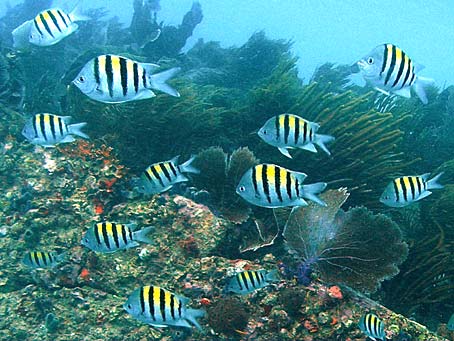
When we got out of the water and back on the boat after about half an hour of snorkeling the sun had gone into hiding behind a cloud and the wind therefore cooled us down pretty quickly. We wrapped ourselves in something dry and continued on to the next snorkeling spot. This time we anchored right next to the coral reef. We spent another half an hour swimming amongst the small coral "islands" looking to see as many of the colorful inhabitants as possible. There are so many different species of fish on these reefs that we quickly lost count how many species we had seen and even now we can't remember whether we have seen certain species or not. The best way to see new species was to simply lie still in the water and stare at the coral. Soon you would see different fish that you hadn't noticed before or that hadn't dared to come out while you were splashing around next to their home.
Þegar við komum aftur um borð í bátinn eftir sirka hálf tíma útí þá var sólin komin á bakvið ský og vindurinn kældi okkur ansi fljótt. Við vöfðum okkur í eitthvað þurrt og héldum áfram að næsta stað. Í þetta skiptið fleygðum við akkeri alveg við kóralrifið. Við vorum aftur í hálftíma að synda á milli lítilla "kóraleyja" að reyna að finna eins marga litríka íbúa þeirra og við gátum. Það eru svo margar tegundir af fiskum þarna að við misstum fljótt tölu á því hversu margar við höfðum séð og meira að segja núna munum við ekki alltaf hvort við höfum séð ákveðna tegund eða ekki. Besta leiðin til þess að sjá nýjar tegundir var að liggja hreyfingarlaus og stara á kóralinn. Smám saman fór maður að sjá alls konar fiska sem maður hafði ekki séð áður eða sem þorðu ekki að sýna sig á meðan maður buslaði við innganginn hjá þeim.
From San Ignacio we hopped on a chicken bus bound for Belize City. We figured that these buses are safe enough for travel in the relative flatness of Belize, as opposed to the highlands of Guatemala where they always looked like they were about to flip over as they hugged the mountainsides. The atmosphere on the bus was fun. There was reggae music playing and everyone knew the words and grooved along. One rastafarian even boarded with a drum and started to play along to some of the songs. As we got closer to the city we saw more and more evidence of hurricane Richard that had hit the city about a week earlier. A lot of trees were laying by the side of the road and some houses were fairly beat up. Even way up in San Ignacio we had seen some newly broken trees that we can only assumed were toppled by Richard. The trip took about two and a half hours and we arrived in Belize City just as a rain shower was clearing. The ferry terminal was only a five minute taxi trip through the centre of Belize city. What little we saw of the city wasn't exactly enchanting, although it wasn't as bad as some people had made it sound. The ferry over to Caye Caulker took about forty five minutes in a fairly fast boat powered by three powerful looking outboard motors.
Frá San Ignacio stukkum við um borð í kjúklingarútu til Belize City. Við hugsuðum sem svo að þessar rútur hljóti að vera nógu öruggar til þess að ferðast í tiltölulegri flatneskjunni í Belize, en kannski ekki í hálöndum Guatemala þar sem þær litu út fyrir að þær myndu velta á hverri stundu þar sem þær brunuðu eftir fjallshlíðunum. Stemmningin í rútunni var skemmtileg. Það var spiluð reggí-tónlist og allir kunnu textana og dilluðu sér með. Það kom meira að segja einn rastafari um borð með trommu og trommaði með nokkrum lögum. Þegar við vorum að nálgast borgina þá fórum við að taka eftir ummerkjum eftir fellibylinn Richard sem fór yfir borgina fyrir viku. Mörg tré lágu fallin við vegarkantinn og sum húsin voru svolítið illa farin. Meira að segja lengst uppi í San Ignacio höfðum við séð nokkur ný-fallin tré sem við gerum ráð fyrir að Richard hafi fellt. Rútuferðin tók um það bil tvo og hálfan tíma og við komum til Belize rétt um það bil sem einum rigningarskúr lauk. Það tók okkur bara fimm mínútur að fara á leigubíl í gegnum miðbæinn og niður að ferjuhöfninni. Það litla sem við sáum af borginni var svo sem ekki mjög heillandi, en samt ekki eins slæmt og sumir höfðu sagt okkur. Siglingin til Caye Caulker tók fjörutíu og fimm mínútur á frekar hraðskreiðum bát knúnum af þremur utanborðsmótorum.
Um leið og við stigum á land á Caye Caulker fundum við það að nú var hafin sólarlandahlutinn af ferðinni. Við erum hætt að skoða hefðbundin Mayaþorp uppí fjöllum og munum héðanaf sleikja sólina á hvítum sandströndum og skoða okkur um á kóralrifum. Caye Caulker er í raun bara mjög, flöt, sólarlandaeyja með hvítum ströndum og heiðbláum sjó í allar áttir. Við leyfðum golfbílaleigubílstjóra að hjálpa okkur að finna hótel í miðjum bænum, rétt hinum megin við götuna frá ströndinni. Herbergið okkar á fyrstu hæðinni á Tropic hótelinu yrði heimili okkar næstu fimm daga.
Það er auðvelt að skoða Caye Caulker þorpið á tveimur tímum því það er bara þrjár götur sem liggja rúman kílómetra langsum eftir norðurenda eyjarinnar og svo nokkrar þvergötur sem tengja þær. Það tekur bara fimm mínútur að labba frá úthafshliðinni á bænum að hliðinni sem snýr að landi þar sem eyjan er breiðust. Við norðurendann á bænum er The Split, lítið sund sem skiptir Caye Caulker eyjunni í tvo hluta. Caye var ein eyja en fellibylur skipti eyjunni í tvennt á sjöunda áratugnum og nyrðri eyjan er núna að mestu óbyggð. The Split er líka vinsælasti sund- og sólbaðsstaðurinn á eyjunni því þar er sjávarbotninn ekki þakinn sjávargrasi eins og annars staðar meðfram ströndinni. Það fóru þó nokkrir klukkutímar hjá okkur í það að liggja á ströndunum og bryggjunum við The Split og í að synda í straumnum sem myndast þar þegar það er að falla að eða flæða út.
Caye Caulker er mjög vinsæll staður til þess að kafa og snorkla og fyrst við megum ekki kafa þá ákváðum við að snorkla smá í staðinn. Við völdum að fara í hálfs dags ferð að kóralrifinu sem er um það bil einn og hálfan kílómeter frá ströndinni í bænum. Við vorum búin að bíða eftir sólríkum degi svo við sæjum kóralinn og íbúana þar í allri sinni litadýrð. Þegar við bókuðum eftirmiðdagsferð þá var útlitið gott því sólin skein skært þó svo það væri smá vindur. Þegar við vorum um það bil að fara um borð í bátinn fór að þykkna yfir og útlitið var ekki alveg eins gott. Við sigldum út ásamt tveimur öðrum pörum og leiðsögumönnunum okkar tveimur að fyrsta staðnum. Þar var sandur í botninum og við stoppuðum þar til þess að sjá skötur. Við hoppuðum úr bátnum og beint í miðjan hóp af skötum í öllum stærðum. Það var magnað að sjá þær fljúga um sjóinn umkringdar öðrum hitabeltisfiskum. Við sáum líka stórann barracuda fisk, eða silfurkúluna eins og heimamenn kalla hann.
 |
| Barracuda |
 |
| Stingrays/ Skötur |
Þegar við komum aftur um borð í bátinn eftir sirka hálf tíma útí þá var sólin komin á bakvið ský og vindurinn kældi okkur ansi fljótt. Við vöfðum okkur í eitthvað þurrt og héldum áfram að næsta stað. Í þetta skiptið fleygðum við akkeri alveg við kóralrifið. Við vorum aftur í hálftíma að synda á milli lítilla "kóraleyja" að reyna að finna eins marga litríka íbúa þeirra og við gátum. Það eru svo margar tegundir af fiskum þarna að við misstum fljótt tölu á því hversu margar við höfðum séð og meira að segja núna munum við ekki alltaf hvort við höfum séð ákveðna tegund eða ekki. Besta leiðin til þess að sjá nýjar tegundir var að liggja hreyfingarlaus og stara á kóralinn. Smám saman fór maður að sjá alls konar fiska sem maður hafði ekki séð áður eða sem þorðu ekki að sýna sig á meðan maður buslaði við innganginn hjá þeim.


 |
| Source |
 |
| Source |
 |
| Source |
 |
| Source |
The wind slowly picked up during our trip and after our second stop we were all really cold by the time we got back on the boat. Bjarki had also gotten sea sick from the choppy water and when he inhaled some sea water his stomach churned and he threw up in the ocean. Later, after doing some final snorkeling before we got too cold to go in again, Bjarki threw up from the boat as well. All in all a pretty eventful snorkeling trip. We bought a cheep waterproof film camera but unfortunately the cloudy sky meant that most of the pictures were too dark.
Á meðan á ferðinni stóð bætti smám saman í vindinn og þegar við komum í annað skiptið uppí bátinn þá var öllum orðið ansi kalt. Bjarki var líka orðinn sjóveikur í úfnum sjónum og þegar hann andaði að sér smá sjó þá fékk maginn nóg og hann ældi í sjóinn. Seinna, þegar við vorum búin að snorkla í þriðja og síðasta skipti, þá gubbaði Bjarki líka úr bátnum. Semsagt ansi viðburðarrík snorklferð. Við keyptum okkur ódýra vatnshelda filmuvél en því miður var lýsingin ekki sú ákjósanlegasta svo að flestar myndirnar voru of dökkar.
The motto of Caye Caulker is "Go Slow" and we definitely adhered to that while we visited. We spent five days there instead of the three that we had planned, and we enjoyed every minute of it. The weather got a little windy and we got some heavy rain a couple of times but mostly we just relaxed in sunny weather, slept till noon and eat some great food at night. The lobster season is just ending right now and we must have had lobster around once a day while we were in town. Although it is still the most expensive option on most menus, you can get great lobster fairly cheap from one of the many street barbecues that line the seaside just outside the Tropic hotel. All the locals on Caye Caulker are very friendly and they are the reason for the relaxed atmosphere. The one problem we had was that someone stole Bjarki's flip-flops when we left them outside our hotel-room door to dry. The staff at the hotel couldn't really be bothered either to look through the security video to try to find them again. The answer we got was that they had looked at the tapes from the camera pointed directly at our room and seen nothing. The shoes therefore must have just vanished.
Mottóið á Caye Caulker er "Go Slow" og við fórum klárlega eftir því að meðan við vorum í heimsókn. Við vorum þar í fimm daga í staðinn fyrir þrjá eins og við höfðum ætlað og nutum hverrar mínútu. Það var svolítill vindur og það rigndi tvisvar mjög hressilega en mestallan tímann nutum við sólríkra daga, sváfum til hádegis og borðuðum góðan mat á kvöldin. Humartímabilinu er að ljúka og við fengum okkur humar að meðaltali einu sinni á dag. Þó svo humar sé það dýrasta á matseðlinum þá er hægt að fá frábæran humar mjög ódýrt á einhverjum af götugrillstöðunum sem standa við sjóinn rétt hjá Tropic hótelinu. Heimamenn á Caye Caulker eru mjög vinalegir og þess vegna er andrúmsloftið á eyjunni mjög afslappað. Eina sem angraði okkur var að einhver stal sandölunum hans Bjarka fyrir utan hótelherbergið okkar þar sem við höfðum skilið þá eftir til að þorna. Starfsfólkið á hótelinu nennti líka lítið að eyða tíma sínum í að skoða myndböndin úr öryggismyndavélunum til þess að reyna að finna þá. Svarið sem við fengum var að það hefði verið farið yfir öryggismyndavélina sem beindist beint að herberginu okkar og þau hefðu ekki séð neitt. Skórnir gufuðu semsagt bara upp.

There were definitely some interesting characters among the locals. One rastafarian attracted more attention than most, wearing palm-leaf helmets and shouting greetings to every passing tourist. Another got us to help him send some e-mails to a couple of foreign ladies, all of them that he apparently loves. There were also the rather heavy set Francine and Roger who both had street barbecues along the beach. Both can be recommended if you go to Caye Caulker, which you should.
Á eyjunni voru klárlega nokkrir mjög skemmtilegir karakterar. Einn rastafari dró að sér meiri athygli en flestir þar sem hann hrópaði kveðjur að túristunum með hjálm úr pálmalaufum. Annar fékk okkur til þess að senda fyrir sig e-mail til nokkurra útlenskra kvenna, sem hann virðist elska allar saman. Það voru líka hin frekar þéttvöxnu Francine og Roger sem áttu bæði götugrillstaði við ströndina. Það er óhætt að mæla með þeim báðum ef þú ferð til Caye Caulker, sem þú ættir klárlega að gera.
Á meðan á ferðinni stóð bætti smám saman í vindinn og þegar við komum í annað skiptið uppí bátinn þá var öllum orðið ansi kalt. Bjarki var líka orðinn sjóveikur í úfnum sjónum og þegar hann andaði að sér smá sjó þá fékk maginn nóg og hann ældi í sjóinn. Seinna, þegar við vorum búin að snorkla í þriðja og síðasta skipti, þá gubbaði Bjarki líka úr bátnum. Semsagt ansi viðburðarrík snorklferð. Við keyptum okkur ódýra vatnshelda filmuvél en því miður var lýsingin ekki sú ákjósanlegasta svo að flestar myndirnar voru of dökkar.
 |
| On the way back from the snorkeling trip/ Á leiðinni til baka úr snorklferðinni |
Mottóið á Caye Caulker er "Go Slow" og við fórum klárlega eftir því að meðan við vorum í heimsókn. Við vorum þar í fimm daga í staðinn fyrir þrjá eins og við höfðum ætlað og nutum hverrar mínútu. Það var svolítill vindur og það rigndi tvisvar mjög hressilega en mestallan tímann nutum við sólríkra daga, sváfum til hádegis og borðuðum góðan mat á kvöldin. Humartímabilinu er að ljúka og við fengum okkur humar að meðaltali einu sinni á dag. Þó svo humar sé það dýrasta á matseðlinum þá er hægt að fá frábæran humar mjög ódýrt á einhverjum af götugrillstöðunum sem standa við sjóinn rétt hjá Tropic hótelinu. Heimamenn á Caye Caulker eru mjög vinalegir og þess vegna er andrúmsloftið á eyjunni mjög afslappað. Eina sem angraði okkur var að einhver stal sandölunum hans Bjarka fyrir utan hótelherbergið okkar þar sem við höfðum skilið þá eftir til að þorna. Starfsfólkið á hótelinu nennti líka lítið að eyða tíma sínum í að skoða myndböndin úr öryggismyndavélunum til þess að reyna að finna þá. Svarið sem við fengum var að það hefði verið farið yfir öryggismyndavélina sem beindist beint að herberginu okkar og þau hefðu ekki séð neitt. Skórnir gufuðu semsagt bara upp.
Á eyjunni voru klárlega nokkrir mjög skemmtilegir karakterar. Einn rastafari dró að sér meiri athygli en flestir þar sem hann hrópaði kveðjur að túristunum með hjálm úr pálmalaufum. Annar fékk okkur til þess að senda fyrir sig e-mail til nokkurra útlenskra kvenna, sem hann virðist elska allar saman. Það voru líka hin frekar þéttvöxnu Francine og Roger sem áttu bæði götugrillstaði við ströndina. Það er óhætt að mæla með þeim báðum ef þú ferð til Caye Caulker, sem þú ættir klárlega að gera.


 |
| Our hotel/ hótelið okkar |